


 Back
Back
New Product | Maxic MTQ6111: Multi-Topology Automotive-Grade High-Precision Constant Current LED Driver
-

Release Date2026-08-05
-

Page View960 times

As the automotive lighting market transitions from functional lighting to smart interaction, driven by the rapid growth of new energy vehicles and intelligent driving technologies, modern automotive lighting systems are evolving from traditional lighting solutions into intelligent, interactive lighting systems. High-end matrix LED and adaptive driving beam (ADB) headlamps are experiencing rapid adoption in mid-to-high-end vehicle models, with intelligent lighting comprehensively penetrating the industry. According to market research, the global automotive LED lighting market will reachUSD 28.89 billion by 2030. Meanwhile, the Chinese automotive lighting supply chain is rapidly emerging by leveraging technological advancement and cost advantages, continuously expanding its market share and transitioning from basic functionality to intelligent experiences.
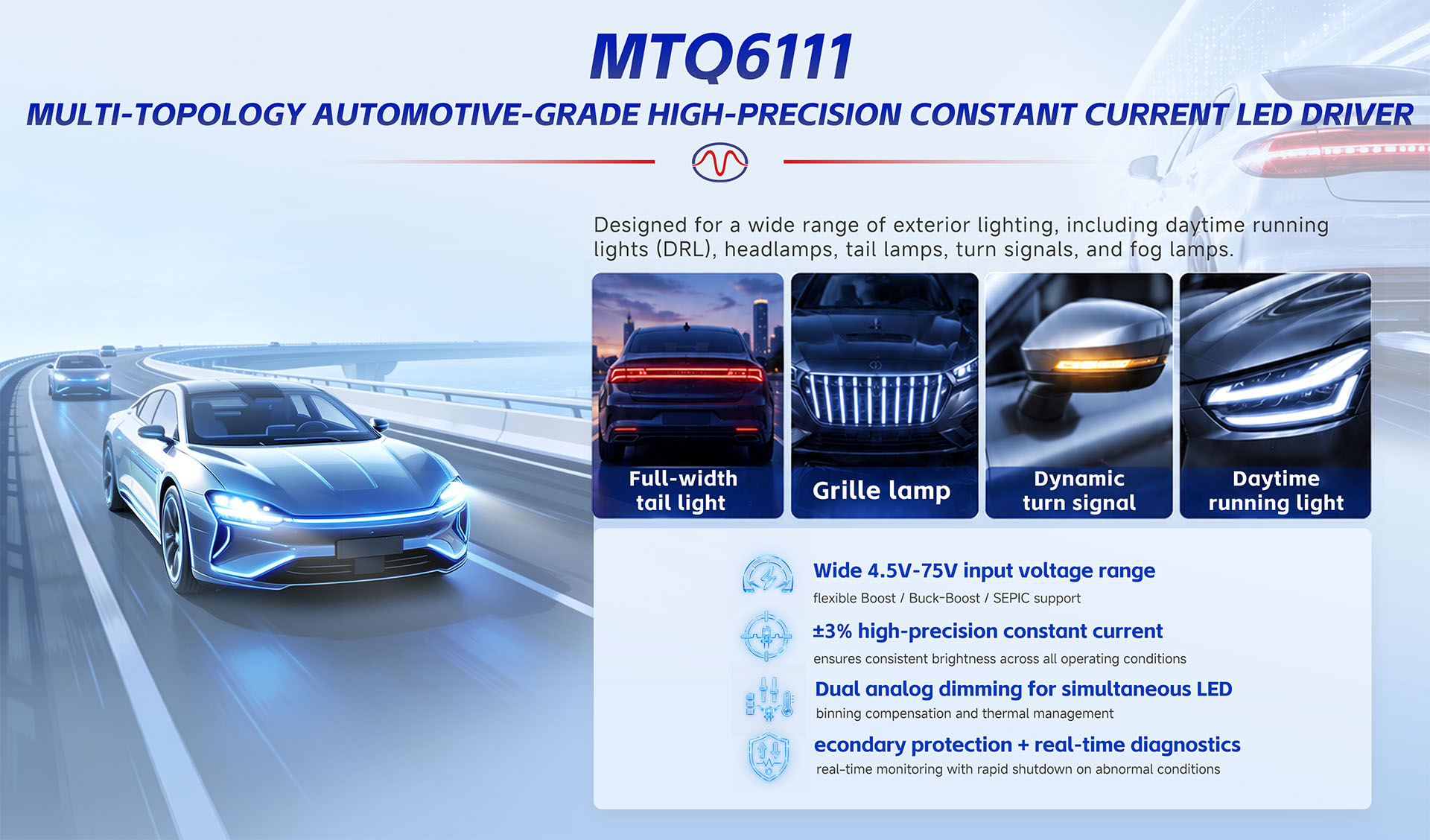
Leveraging its deep technical expertise, Maxic launches MTQ6111, a high-precision constant current driver with streamlined peripheral design. With a peak current mode control architecture, the chip is AEC-Q100 qualified and operates over a wide junction temperature range of -40°C to 150°C. It supports multiple topologies including Boost, Buck-Boost, and SEPIC, to drive different types and power levels of LED lighting systems. MTQ6111 is suitable for exterior automotive lighting applications such as DRLs, headlamps, tail lamps, turn signals, and fog lamps. Featuring full-load output current accuracy within ±3%, the chip ensures uniform LEDbrightness. Its wide 4.5V to 75V input voltage range supports both 12V and 24V automotive power systems. The chip supports multiple dimming modes, including analog, PWM, and analog-to-PWM dimming, and incorporates spread-spectrum modulation to improve EMI performance. It also integrates secondary over-voltage and under-voltage protection, cycle-by-cycle over-current protection, and LED open-circuit/short-circuit detection, with real-time fault reporting through the FAULT and IMON pins to enhance overall vehicle reliability.
Wide input voltage range: 4.5V ~ 75V
Supports analog dimming, analog-to-PWM dimming, and external PWM dimming
High PWM dimming resolution: up to 1000:1@100Hz
Output current accuracy: ±3% (at full load)
High analog dimming accuracy: ±10% output current accuracy @10% analog dimming
Spread-spectrum frequency modulation to improve EMI performance
Integrated output current monitoring pin
Open-drain fault report pin
Built-in PMOS driver circuit for PWM dimming and LED short-circuit protection
Dual integrated analog dimming ports: LED binning and NTC resistor-based thermal sensing
Comprehensive protection circuits and fault indication functions: UVLO, OVP, OCP, UVP, OTP.
AEC-Q100 qualified
Available in TSSOP20PP package
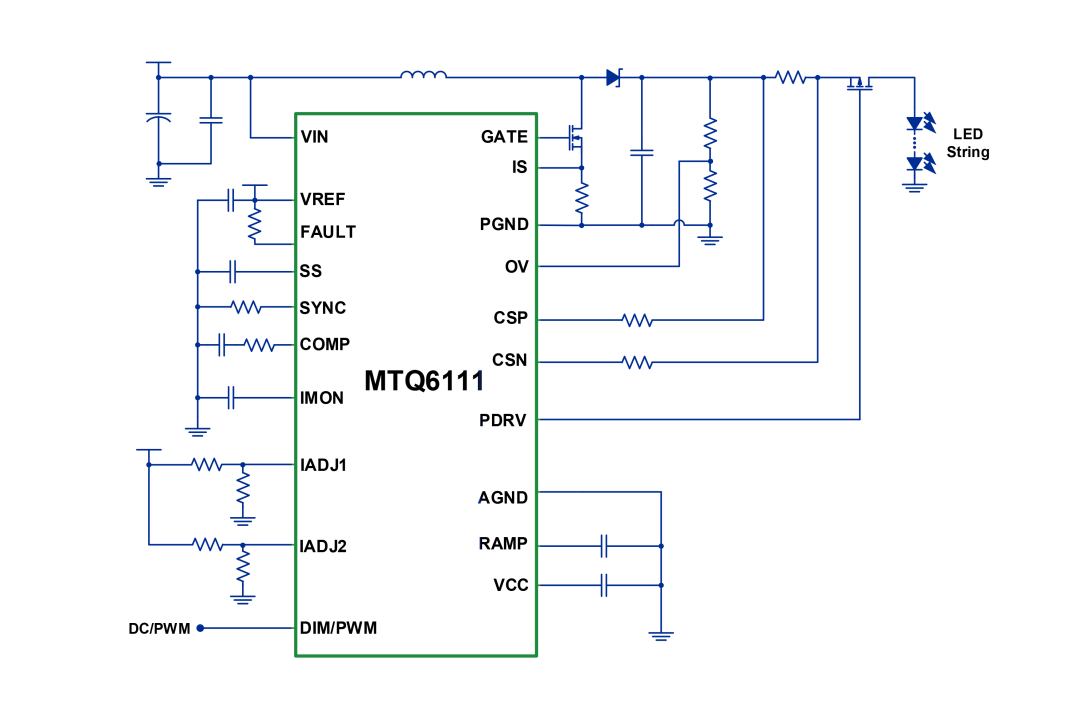
■ High-Precision Output Current
MTQ6111 delivers output current accuracy within ±3% (at full load). With a built-in rail-to-rail current sense amplifier supporting a 0V to 75V common-mode voltage range, the chip ensures LED brightness consistency across all operating conditions.
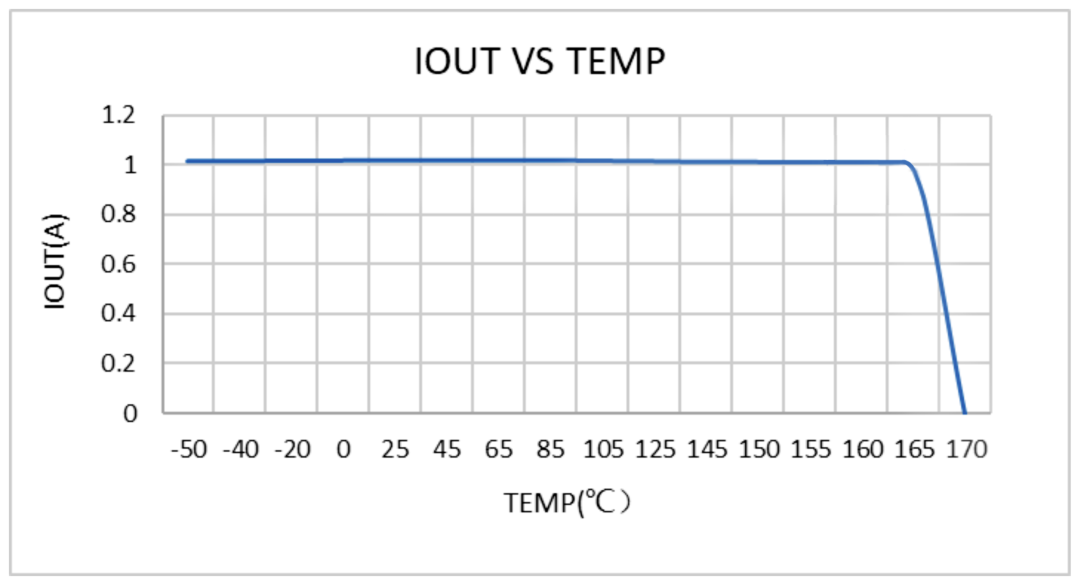
■ Wide Input Voltage Range for Reliable Operation
MTQ6111 supports a wide input voltage range from 4.5 V to 75 V, compatible with 12V/24V automotive power systems, allowing reliable operation under voltage transients such as engine cranking and load dump.
■ Flexible Dimming with Multi-Mode Support
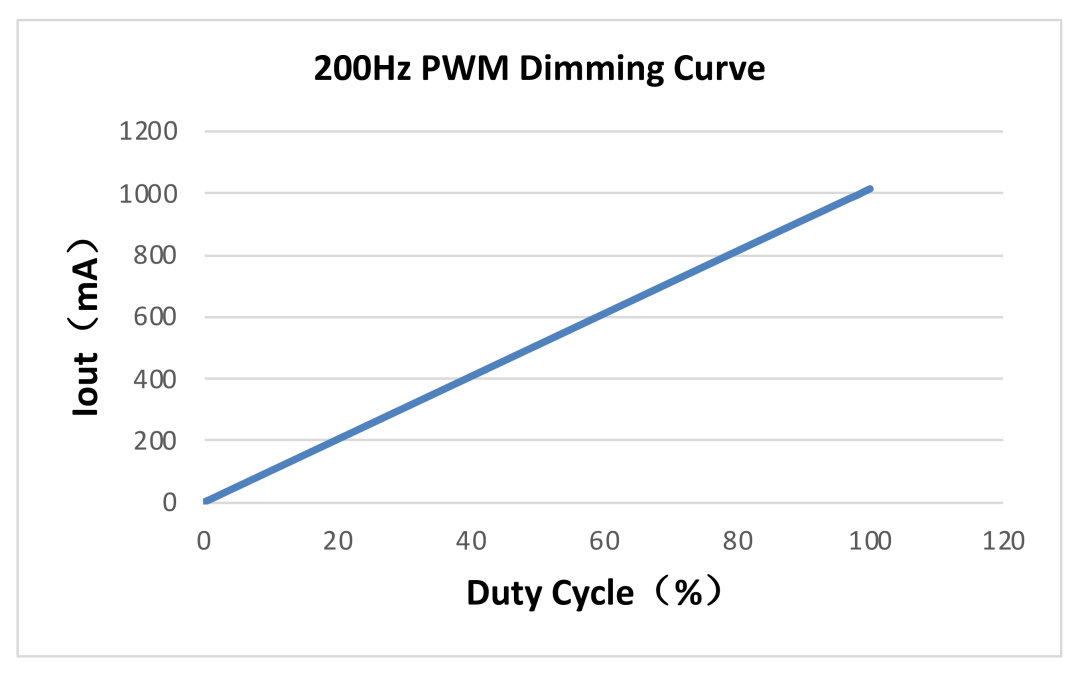
The chip supports three dimming modes: analog dimming, PWM dimming, and analog-to-PWM dimming. The DIM/PWM pin can accept an external PWM signal directly for PWM dimming, or an analog voltage that is converted into a PWM duty cycle internally. The built-in analog-to-PWM-duty-cycle generator enables independent dimming control. Analog-to-PWM dimming is especially suited to automotive lighting applications that require switching between two brightness levels, such as daytime running light and position light applications.
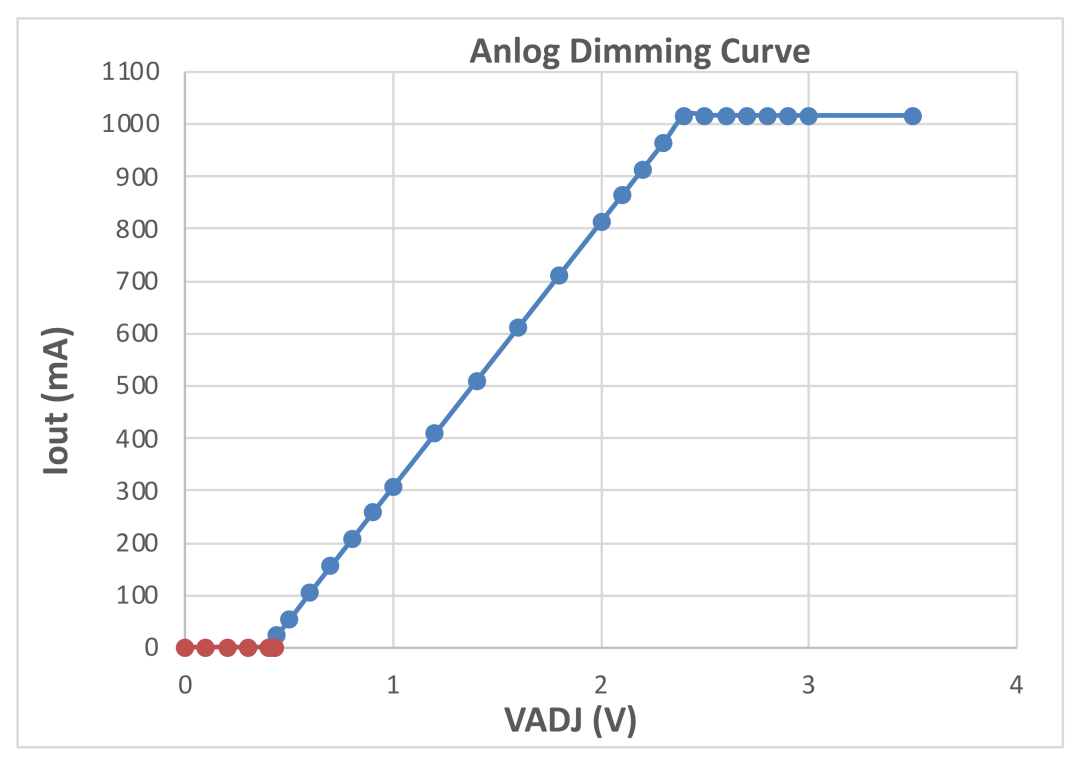
■ Dual Analog Dimming for LED Binning and Thermal Management
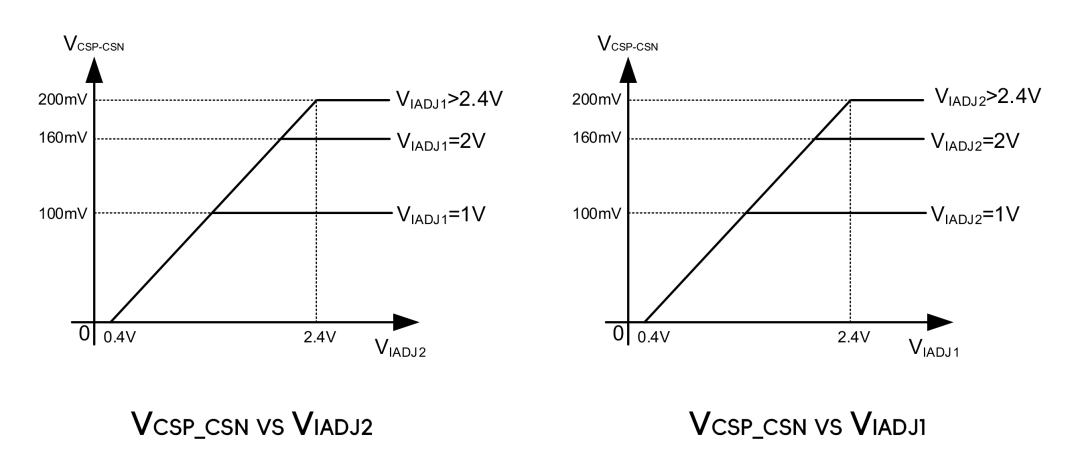
MTQ6111 provides two independent analog dimming input pins (IADJ1 and IADJ2), enabling both LED binning and NTC resistor-based thermal sensing simultaneously. The voltage across the LED current sense resistor, VCSP-CSN, is adjusted by the IADJ1 and IADJ2 pin voltages, with the relationship:
(VIADJ1,2-0.4)/V(CSP–CSN)=10
As the IADJ pin voltage increases from 0.4V to 2.4V, the LED current can be adjusted linearly and continuously.
■ Secondary Output Over-voltage/Under-Voltage Protection
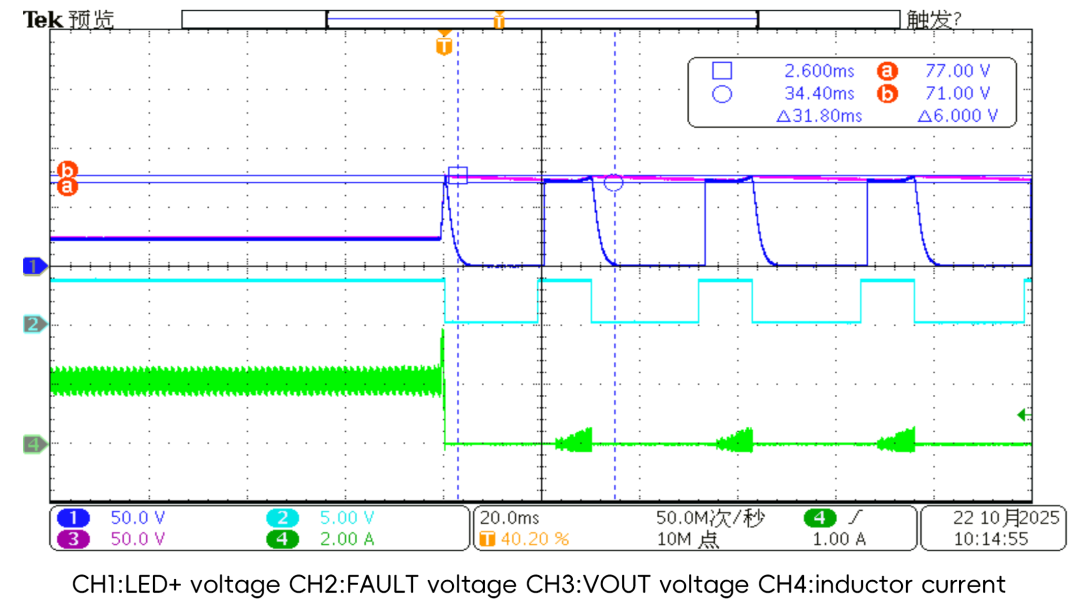
MTQ6111 integrates a secondary output over-voltage protection (OVP2) that directly monitors the CSN pin voltage, with a trigger threshold of 75V (typical) and a hysteresis of 3V (typical). When the CSN pin voltage exceeds 75V, the GATE pin is pulled low to turn off the NMOS, the PDRV output is turned off simultaneously, and the SS and COMP pins are discharged. The system automatically resumes normal operation when the voltage drops below 72V.
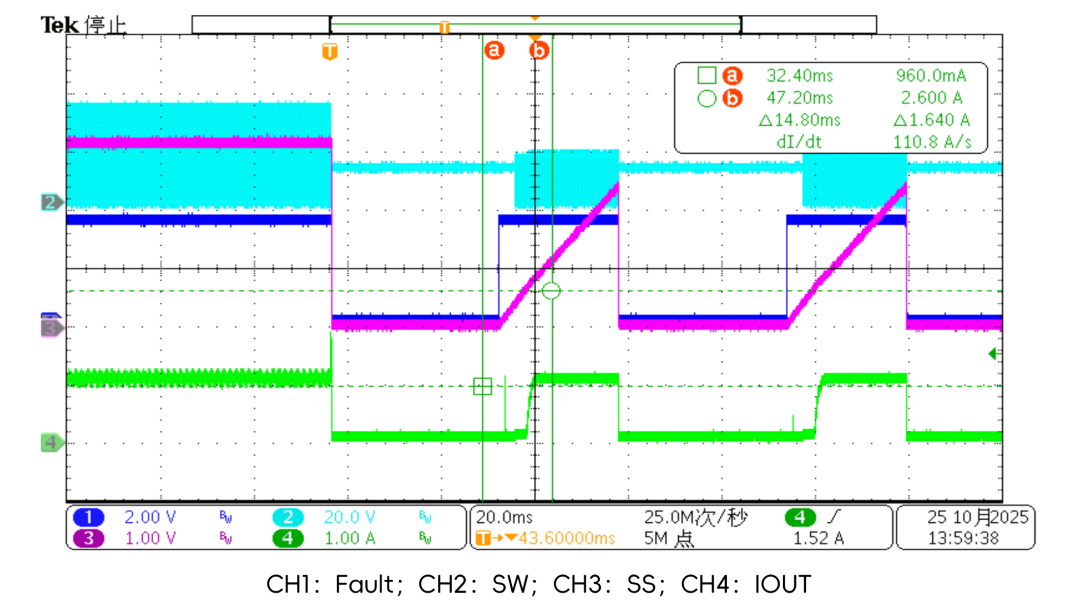
In addition, when Vcsn < 3.8V, the secondary under-voltage protection (UVP2) is triggered, disabling the GATE and PDRV outputs and pulling the FAULT pin low, effectively providing protection against abnormal conditions such as output short-circuit and PMOS over-temperature in SEPIC topologies.
■ Spread-Spectrum Noise Reduction for Optimized EMI
MTQ6111 integrates spread-spectrum frequency modulation, effectively reducing peak and average EMI emissions, helping systems pass CISPR 25 and automotive EMI compliance testing while simplifying EMI remediation.
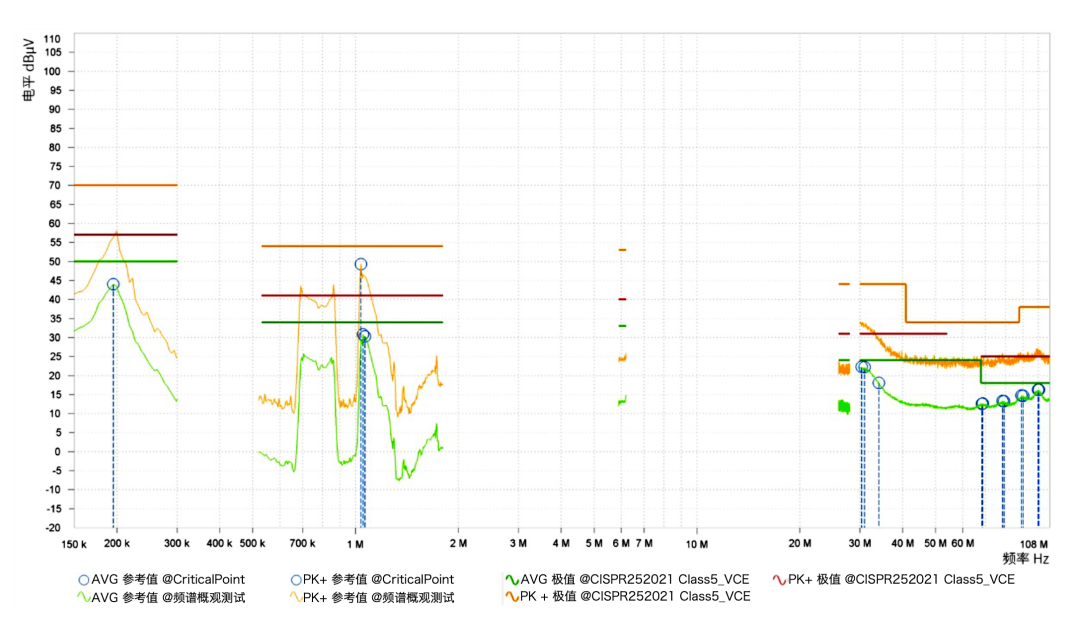
■ Comprehensive Fault Protection with Real-Time Reporting
The chip integrates multiple protection features, including cycle-by-cycle over-current protection, output over-voltage/under-voltage protection, and LED open/short detection. Abnormal states are reported in real time via the fault report pin (FAULT) and the current monitoring output pin (IMON), enhancing system reliability.
*The test results referenced herein are obtained under laboratory conditions. Actual performance may vary depending on application environments and production variations. Maxic reserves the right of final interpretation.
Recommended News
-
2022-09-14
Grand launch | MT5785: 100W ultra-fast wireless charging and 18W reverse transmission
-
2022-08-05
Core leads new era | Maxic participated the Guangzhou International Lighting Exhibition 2022
-
2022-07-04
Maxic launched a fully integrated ultra-low power optical proximity sensor
-
2022-06-24
Maxic launched a high performance wired fast charging 20W~65W overall solution
